
What is the narrow gate that leads to life? What is the wide gate?
Quick Answer: What is the narrow gate that leads to life? In Matthew 7:13, the narrow gate is the way of grace, and the wide or broad gate is the way of self-righteousness. Not many find the narrow gate (Matthew 7:14), because the religions of the world encourage good behavior for salvation, and this is very appealing to people. Scripture is clear: We must set aside our efforts to earn or maintain righteousness with God and humble ourselves by receiving grace (James 4:6).
Diving Deeper: If you were to research some of the main religions of the world like Islam and Buddhism, you would see these religions teach salvation by works of some sort. In Islam, the hope is that our good works outweigh our bad, as Allah weighs works on a scale at the final judgment. In Buddhism, salvation is attained through enlightenment or Nirvana, perhaps over several lifetimes.
The concept of grace is unique to Christianity. Grace means that salvation is wholly based on the finished work of Jesus Christ and that salvation only needs to be received (John 3:16-17). We simply believe in Jesus, and we are made righteous (2 Corinthians 5:21). We humble ourselves by admitting that good works mean nothing with respect to salvation, and we instead receive the free gift of righteousness (Romans 5:17).
This is the narrow gate of grace that few find. Many miss it, because it is “easy and light” (Matthew 11:28-30), and it seems almost too good to be true. As simple as the Gospel is, laying aside our self-righteousness can be difficult! This is because we’re enslaved to the flesh before we believe, and the flesh has a legalistic, self-improvement aspect to it. The flesh seeks to be righteous independent of Christ (Galatians 3:3).
Before we believe, we might seek to save ourselves through our own efforts. This is the wide gate, because it’s easy to fall into this trap. In fact, we can deduce from Jesus’ words that this is the choice of most people (Matthew 7:14). Yet, the Law shows us the futility of this path (Romans 3:19-20). Nobody is made righteous by their own works (Galatians 3:19-23). God gave the Law so we’d cease to walk through the wide gate and instead choose His grace. He gave the Law so humanity would see its need for the free gift of eternal life (Romans 6:23).
The gift of eternal life is free for you, but it did cost Jesus everything. This is not cheap grace. It is costly, because Jesus paid the ultimate price for your salvation so you could receive it freely.
Let’s Make It a Conversation!
1. What have you heard about the narrow gate and the wide gate?
2. How does the concept of God’s grace help you understand the narrow gate?
3. Matthew 11:28-30 says that connection with Christ is “easy and light.” What does that mean to you?
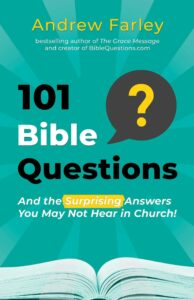 101 Bible Questions: And the Surprising Answers You May Not Hear in Church is now available on Amazon!
Tags: Galatians 3:19-23, Gate, Grace, James 4:6, Matthew 7:13, Narrow gate, Righteousness, Romans 3:19-20, Romans 6:23, Salvation, Wide gate
